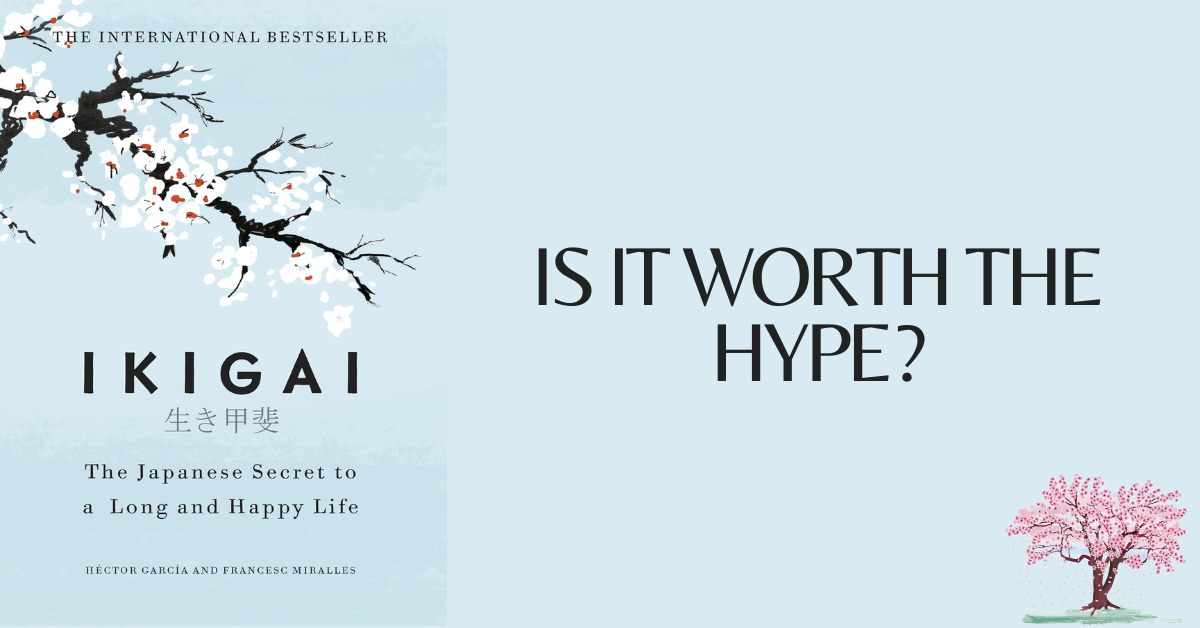
After reading “Ikigai: The Japanese Secret to a Long and Happy Life,” I felt underwhelmed by the content. Despite the book’s popularity and the hype surrounding it, I found that it offered little in terms of new insights or unique perspectives, especially for someone who has already read several self-help books.
Key Observations
- Japanese Terminology:
- The book introduces several Japanese words and concepts, such as “ikigai” (a reason for being), “moai” (social support groups), and “hara hachi bu” (eating until 80% full). While these terms are interesting and add a cultural flavor, they don’t provide new or groundbreaking ideas. It felt like these Japanese words were used to dress up otherwise familiar self-help concepts.
- Interviews with Centenarians:
- The interviews with people who have lived more than 100 years were one of the more engaging parts of the book. However, the advice from these centenarians—such as staying active, maintaining social connections, and finding purpose—is already well-known in the self-help genre. There wasn’t much here that felt novel or particularly insightful.
- Therapy and Purpose:
- I was particularly concerned with the authors’ stance on mental health. They suggested that many mental health issues, like stress and depression, could be cured by simply finding one’s purpose. This is an overly simplistic and potentially harmful viewpoint. Mental health is complex, and while having a sense of purpose can be beneficial, it is not a cure-all for serious conditions like depression.
- Repetition of Common Themes:
- Much of the book felt like a reiteration of themes and advice found in other self-help books. Topics such as the importance of community, moderation in eating, and regular physical activity are important but hardly new. For a reader who has explored the self-help genre, “Ikigai” doesn’t offer much that is fresh or innovative.
Overall, I believe “Ikigai: The Japanese Secret to a Long and Happy Life” doesn’t deserve the hype it has received in the self-help section. If you’ve read other self-help books, you’ll likely find that this book doesn’t add much to your understanding. The use of Japanese terms and the focus on centenarians add some interest, but the core content remains largely the same as what is already widely available. The book’s take on mental health also feels overly simplistic and unhelpful. In essence, “Ikigai” might be more appealing to those new to self-help literature rather than seasoned readers.