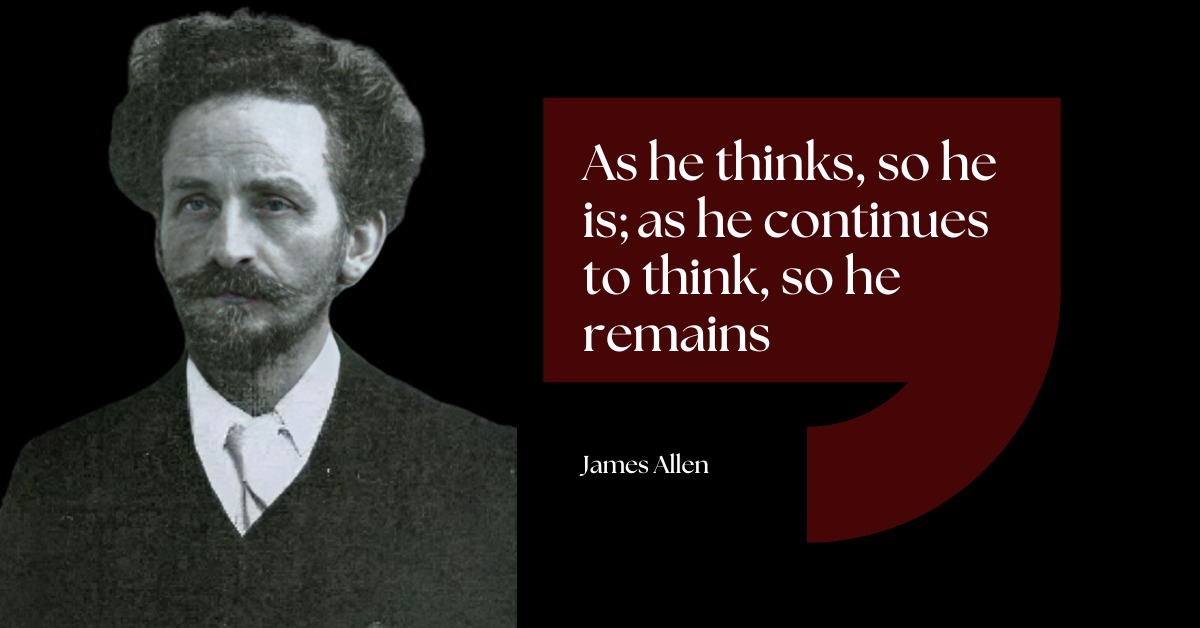
James Allen was an early self-help and personal development author in the late 19th and early 20th centuries. His writings have inspired and continue to attract a wide readership today, providing insights into practical wisdom and spiritual guidance. Let us explore these themes as reflected in his works.
Major Themes in the Writing of James Allen
Power of Thought and Mindfulness
An essential aspect of James Allen’s philosophy is that thoughts are seeds toward one’s destiny. He famously said, “As a man thinketh in his heart, so is he.” According to him, our line of thinking shapes our character, circumstances, and achievements. By fostering positive thoughts, individuals can transform their lives and attract success.
Allen likens the mind to a garden. Just as a gardener waters the soil to ensure plants bear fruit, one must cultivate the mind with thoughts of courage, love, and strength to achieve growth and fulfillment. This concept highlights the importance of mindfulness in thought, as our inner world defines our outer reality.
Self-Responsibility and Personal Development
James Allen valued personal responsibility and self-discipline as fundamental principles for success and happiness. In his book “The Path of Prosperity,” he emphasizes that individuals are the creators of their own lives. By taking control of one’s mind, actions, and decisions, one can steer life towards prosperity and well-being.
He underscores decency, persistence, and self-discipline as keys to overcoming obstacles and attaining ultimate goals. Allen’s literature is motivational, encouraging readers to cultivate virtues such as patience, honesty, and humility, which are essential for personal and moral development.
Spiritual Growth and Inner Harmony
Beyond material success, James Allen delves into spiritual growth and inner peace in works like “Byways of Blessedness.” He discusses how living according to higher principles imparts purpose and meaning to life. True happiness, according to Allen, arises from within and is nurtured by virtues such as compassion, forgiveness, and gratitude.
He encourages readers to seek spiritual wisdom through reflection and meditation. With a solid spiritual foundation rooted in universal truths and moral values, one can experience inner satisfaction that transcends material wealth.
Mastery of Destiny and Positive Transformation
In “The Mastery of Destiny,” James Allen explores the mechanisms of self-change and mastering life circumstances. He challenges the notion of fate and determinism, arguing that individuals shape their future through willful choice and resolute action.
Allen emphasizes forming habits and mental attitudes that empower individuals to grow and succeed. He believes in the transformative power of sustained effort, resilience in adversity, and faith in one’s abilities.
Heritage and Impact
James Allen’s works on self-help, personal development, and spiritual unfolding have influenced many authors. His timeless insights into the power of thought, self-control, and moral integrity continue to inspire thousands to embark on personal transformation and self-discovery. With eloquent prose and profound philosophy, Allen offers practical wisdom for navigating life‘s adversities with power, clarity, and purpose.
His focus on positive thinking, taking responsibility for one’s actions, and striving for spiritual enlightenment resonates with audiences seeking a fulfilled life. The legacy of James Allen lies in his ability to motivate individuals to understand themselves and the world. His teachings remain a guide for personal development, ethical living, and true happiness.
Frequently Asked Questions
What is the main message of James Allen’s writings?
James Allen’s main message is that our thoughts shape our character, circumstances, and achievements. By fostering positive and constructive thoughts, individuals can transform their lives and attract success.
How does James Allen define true happiness?
James Allen defines true happiness as arising from within and being nurtured by virtues such as compassion, forgiveness, and gratitude. He believes that living according to higher principles imparts purpose and meaning to life.
What are the key principles for success and happiness according to James Allen?
According to James Allen, key principles for success and happiness include personal responsibility, self-discipline, decency, persistence, and self-control. These virtues are essential for overcoming obstacles and achieving ultimate goals.
How can individuals transform their lives according to James Allen?
James Allen believes individuals can transform their lives by cultivating positive thoughts, taking control of their actions and decisions, and forming empowering habits and mental attitudes. Sustained effort, resilience in adversity, and faith in one’s abilities are crucial for positive transformation.
What role does mindfulness play in James Allen’s philosophy?
Mindfulness plays a significant role in James Allen’s philosophy, as it emphasizes the importance of being aware of one’s thoughts and cultivating positive thinking. Mindfulness helps shape one’s inner world, which in turn defines the outer reality.
How has James Allen influenced modern self-help literature?
James Allen has greatly influenced modern self-help literature with his timeless insights into the power of thought, self-control, and moral integrity. His works continue to inspire individuals towards personal transformation, self-discovery, and ethical living.